


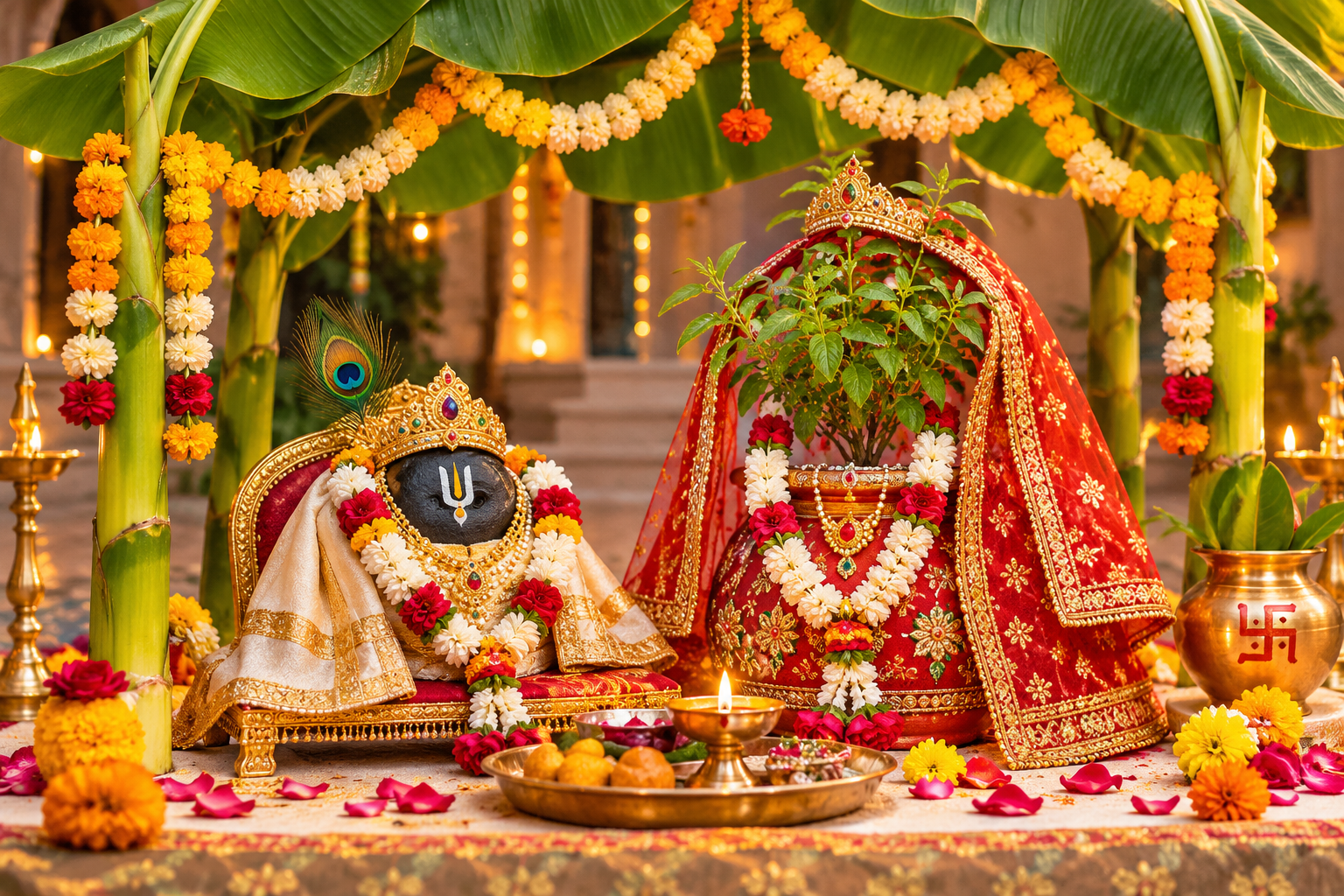
Tulsi Vivah is one of the most beautiful and sacred celebrations in Hindu tradition. It marks the ceremonial marriage of Goddess Tulsi with Lord Vishnu, represented by the Shaligram Shila or an image of Shri Krishna. This divine wedding symbolizes devotion, purity, prosperity and the eternal bond between the divine feminine and masculine energies.
Celebrated during the auspicious month of Kartik, Tulsi Vivah holds special importance for devotees of Lord Vishnu and Goddess Lakshmi. On this day, devotees decorate the Tulsi plant like a bride, prepare a beautiful wedding mandap, perform traditional marriage rituals and seek divine blessings for happiness and harmony.
What makes Tulsi so sacred in Hinduism? What is the story behind Tulsi Vivah? And how can you perform Tulsi Vivah puja at home?
Let’s explore the date, significance, vrat katha, puja vidhi, rituals and spiritual importance of Tulsi Vivah 2026.
Tulsi Vivah 2026: Date and Tithi
According to the North Indian Panchang, Tulsi Vivah will be celebrated on Saturday, 21 November 2026, on Kartik Shukla Dwadashi.
| Details | Information |
|---|---|
| Festival | Tulsi Vivah 2026 |
| Date | Saturday, 21 November 2026 |
| Tithi | Kartik Shukla Dwadashi |
| Bride | Goddess Tulsi |
| Groom | Lord Vishnu (Shaligram Shila) |
| Puja time | Traditionally performed in the evening |
The Dwadashi Tithi begins at approximately 6:31 AM on 21 November and ends at 4:56 AM on 22 November, according to the New Delhi Panchang.
Many families also perform Tulsi Vivah on the evening of Dev Uthani Ekadashi or follow their regional family traditions. The exact auspicious wedding time depends on the location, so devotees should consult their local Panchang.
What Is Tulsi Vivah?
Tulsi Vivah is the symbolic wedding ceremony of Goddess Tulsi and Lord Vishnu. The Tulsi plant is worshipped as a manifestation of Goddess Tulsi, who is deeply associated with devotion to Lord Vishnu.
In this ceremony, the Tulsi plant is decorated as a bride, while a Shaligram Shila represents the groom. Shaligram is a sacred form of Lord Vishnu worshipped by Vaishnav devotees.
The ceremony uses traditional Hindu marriage customs for the wedding, including:
- Decorating the Tulsi plant with a red chunari and ornaments.
- Preparing a beautiful mandap using sugarcane.
- Worshipping Lord Vishnu and Goddess Tulsi.
- Performing symbolic wedding rituals and pheras.
- Offering bhog and performing aarti.
People regard Tulsi Vivah as an auspicious occasion that marks the end of Chaturmas and the start of the traditional Hindu wedding season.
Why do people celebrate Tulsi Vivah? Spiritual Significance
Tulsi Vivah is not simply a religious ceremony; it carries deep spiritual meaning.
1. The Divine Union of Goddess Tulsi and Lord Vishnu
The marriage represents the eternal connection between devotion and divinity. Many traditions honor Goddess Tulsi as among the most devoted worshippers of Lord Vishnu.
Her union with Lord Vishnu symbolizes complete surrender, faith and unconditional devotion.
2. Beginning of the Hindu Wedding Season
According to Hindu tradition, Lord Vishnu enters Yog Nidra during Chaturmas and awakens on Dev Uthani Ekadashi.
After this divine awakening, auspicious ceremonies and wedding celebrations resume in many Hindu communities.
Tulsi Vivah marks this transition, and devotees celebrate it with great devotion.
3. Importance of Tulsi in Hindu Worship
Tulsi holds a special place in Hindu households. Devotees traditionally offer Tulsi leaves to Lord Vishnu and Shri Krishna.
Worshippers hold Tulsi in special regard for Lord Vishnu and use her leaves in many Vaishnava pujas and offerings.
4. Symbol of Happiness and Prosperity
Many devotees believe that performing Tulsi Vivah brings blessings of peace, harmony and prosperity into the household.
Married couples pray for a happy and harmonious married life, while unmarried devotees seek blessings for a good life partner.
Tulsi Vivah Vrat Katha: The Story of Goddess Vrinda and Jalandhar
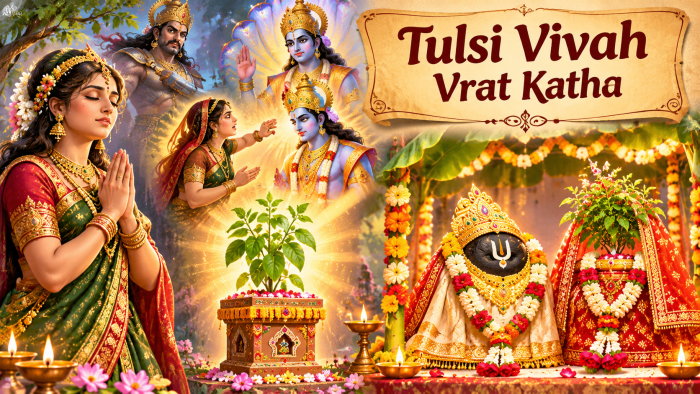
The Tulsi Vivah story centers on Goddess Vrinda, her devotion to Lord Vishnu, and the tale of the demon king Jalandhar.
According to a popular Puranic tradition, Vrinda was a devoted wife of Jalandhar. People believed that her devotion and chastity protected Jalandhar, making him extremely powerful.
Jalandhar became arrogant and began challenging the gods. His growing power created fear among the Devas, who approached Lord Vishnu for help.
Lord Vishnu eventually intervened to restore cosmic balance.
The Divine Test of Vrinda’s Devotion
According to the popular version of the legend, Lord Vishnu assumed the appearance of Jalandhar and approached Vrinda.
Vrinda believed he was her husband, and she broke her spiritual vow. As a result, Jalandhar lost the divine protection that had made him invincible.
The gods were then able to defeat Jalandhar.
When Vrinda discovered what had happened, she was heartbroken and deeply hurt by Lord Vishnu’s actions.
In her sorrow, she cursed Lord Vishnu to turn into stone.
Lord Vishnu accepted the curse, and people traditionally associate it with the origin of the sacred Shaligram form.
How Vrinda Became Goddess Tulsi
After the incident, Vrinda left her mortal body. Lord Vishnu blessed her and declared that she would become the sacred Tulsi plant.
He also promised that Tulsi would always remain dear to him and that no worship of Vishnu would be considered complete in many traditions without Tulsi leaves.
Lord Vishnu further blessed her by accepting the Shaligram form as her divine consort.
Thus, the sacred union of Goddess Tulsi and Lord Vishnu came to be celebrated as Tulsi Vivah.
This story teaches devotees about unwavering devotion, divine grace and the importance of righteousness.
Note: Different Puranic and regional traditions narrate aspects of the Vrinda-Jalandhar story differently.
Tulsi Vivah Puja Vidhi: How to Perform Tulsi Vivah at Home
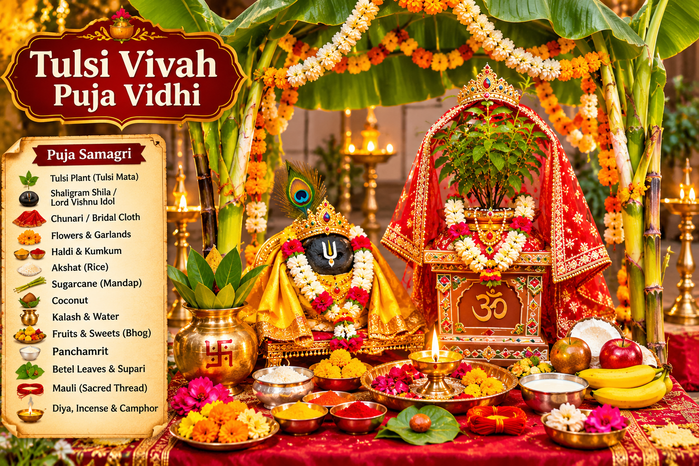
Tulsi Vivah can be performed at home with devotion and traditional wedding rituals. Families may follow slightly different customs depending on their region and family traditions.
Here is a simple guide to performing Tulsi Vivah puja.
Step 1: Clean the Puja Area
Clean the area around the Tulsi plant and decorate the Tulsi Vrindavan with rangoli, flowers and traditional decorations.
Step 2: Decorate Goddess Tulsi
Dress the Tulsi plant like a bride using:
- Red or yellow chunari
- Flowers and garlands
- Bangles
- Vermilion (sindoor)
- Haldi and kumkum
- Decorative ornaments
Step 3: Prepare the Wedding Mandap
Create a small wedding mandap around the Tulsi plant. Sugarcane stalks are traditionally used to decorate the mandap.
Place a Shaligram Shila or an image of Lord Vishnu or Shri Krishna opposite the Tulsi plant.
Step 4: Perform Ganesh Puja
Begin the ceremony by remembering Lord Ganesha and seeking his blessings for the successful completion of the puja.
Step 5: Worship Lord Vishnu and Goddess Tulsi
Offer flowers, sandalwood, akshat, incense and a diya to both deities.
Chant the names of Lord Vishnu and Goddess Tulsi with devotion.
Step 6: Perform the Wedding Ceremony
Perform the symbolic marriage rituals according to family tradition. These may include:
- Sankalp
- Kanyadaan
- Offering of flowers
- Symbolic exchange of garlands
- Mangalashtak or wedding prayers
- Pheras around the Tulsi plant, where customary
Step 7: Offer Bhog and Perform Aarti
Offer fruits, sweets, panchamrit and traditional prasad.
Conclude the ceremony with Tulsi Mata Aarti and Vishnu Aarti.
Distribute prasad among family members and devotees.
Tulsi Vivah Puja Samagri: Complete Checklist
Keep the following puja items ready before starting the ceremony.
- Tulsi plant and Tulsi Vrindavan
- Shaligram Shila or Lord Vishnu idol
- Red or yellow chunari
- Flowers and garlands
- Sugarcane stalks for mandap decoration
- Haldi and kumkum
- Akshat (uncooked rice)
- Sandalwood paste
- Incense sticks and diya
- Cotton wicks and ghee
- Fruits and sweets
- Panchamrit
- Betel leaves and supari
- Coconut
- Kalash
- Sacred thread (mauli)
- Wedding decorations and ornaments
- Aarti thali
The items may vary according to regional customs and the family’s traditional method of worship.
Tulsi Vivah Mantra
Devotees can chant simple Vishnu and Tulsi prayers during the ceremony.
Lord Vishnu Mantra
Om Namo Bhagavate Vasudevaya.
Meaning: I bow to Lord Vasudeva, the Supreme Divine Being.
Tulsi Mata Prayer
Tulasi Shri Sakhi Shubhe Papaharini Punyade |
Namaste Naradanute Namo Narayanapriye ||
Devotees may also chant the Vishnu Sahasranama or recite Tulsi Mata Stotra according to their tradition.
Why Is Tulsi Offered to Lord Vishnu?
Tulsi is considered extremely dear to Lord Vishnu. In Hindu tradition, offering Tulsi leaves during Vishnu and Krishna worship is regarded as a symbol of pure devotion.
Tulsi leaves are commonly offered during:
- Vishnu Puja
- Shri Krishna Puja
- Satyanarayan Puja
- Ekadashi worship
- Kartik month prayers
The offering represents love, surrender and devotion rather than material wealth.
What Should You Do on Tulsi Vivah?
Here are some traditional practices devotees follow on this auspicious day:
- Wake up early and take a bath.
- Clean and decorate the Tulsi Vrindavan.
- Offer water to the Tulsi plant according to your family tradition.
- Light a diya near Tulsi in the evening.
- Perform Tulsi Vivah with Lord Vishnu or Shaligram.
- Chant Vishnu mantras and Tulsi prayers.
- Offer fruits and sweets as bhog.
- Donate food, clothes or other essentials to those in need.
Devotees also use this occasion to spend time in prayer and express gratitude for the blessings in their lives.
What Should You Avoid During Tulsi Vivah?
Some traditional observances include:
- Avoid plucking Tulsi leaves on the day of worship unless required for a specific ritual.
- Avoid disrespecting or damaging the Tulsi plant.
- Maintain cleanliness in the puja area.
- Avoid arguments and negative behaviour during the ceremony.
- Follow your family’s fasting and worship customs.
Observances can differ between households and regional traditions.
Benefits and Spiritual Importance of Worshipping Tulsi
Tulsi worship has been an important part of Hindu household traditions for generations.
Its spiritual significance includes:
1. Encourages devotion: Daily Tulsi worship helps devotees develop a regular prayer practice.
2. Symbolizes purity: Tulsi is associated with purity, auspiciousness and devotion.
3. Strengthens family traditions: Tulsi Vivah brings family members together through shared rituals and prayers.
4. Promotes gratitude: Worshipping Tulsi reminds devotees to respect nature and appreciate its gifts.
5. Encourages charity: The occasion inspires devotees to help others and perform acts of kindness.
Frequently Asked Questions About Tulsi Vivah
1. When is Tulsi Vivah in 2026?
Tulsi Vivah will be celebrated on Saturday, 21 November 2026, on Kartik Shukla Dwadashi according to the commonly followed North Indian Panchang.
2. Why is Tulsi Vivah celebrated?
Tulsi Vivah celebrates the divine marriage of Goddess Tulsi and Lord Vishnu. It symbolizes devotion, purity and the end of Chaturmas.
3. Who is the husband of Goddess Tulsi?
In the Tulsi Vivah tradition, Lord Vishnu is considered the divine consort of Goddess Tulsi. He is represented by the sacred Shaligram Shila or an image of Shri Krishna.
4. Can Tulsi Vivah be performed at home?
Yes. Devotees can perform Tulsi Vivah at home by decorating the Tulsi plant, preparing a small mandap, worshipping Shaligram or Lord Vishnu and performing traditional wedding rituals.
5. Why is sugarcane used in Tulsi Vivah?
Sugarcane stalks are traditionally used to create the wedding mandap. They form part of the festive decoration and symbolize auspiciousness and prosperity.
6. Can unmarried girls perform Tulsi Vivah?
Yes. Unmarried women can worship Goddess Tulsi and seek blessings for a happy and harmonious married life.
7. What is the connection between Dev Uthani Ekadashi and Tulsi Vivah?
Dev Uthani Ekadashi marks the awakening of Lord Vishnu after his traditional four-month period of Yog Nidra. Tulsi Vivah follows this occasion in many traditions and marks the beginning of the wedding season.
8. Which plant is worshipped during Vivah?
The sacred Tulsi plant, generally Holy Basil (Ocimum tenuiflorum), is worshipped as Goddess Tulsi.
Conclusion: Celebrate the Divine Union of Tulsi and Lord Vishnu
Tulsi Vivah is a beautiful reminder of devotion, faith and the sacred relationship between humanity and nature. The divine marriage of Goddess Tulsi and Lord Vishnu teaches us that true devotion goes beyond material offerings and comes from a pure heart.
As we celebrate Tulsi Vivah 2026, let us bring the spirit of devotion into our homes, seek the blessings of Tulsi Mata and Lord Vishnu, and fill our lives with peace, harmony and positivity.
DevotionalFolks wishes you and your family a blessed and joyful Tulsi Vivah 2026!
May Tulsi Mata and Shri Hari bless every home with happiness, prosperity and divine grace.
Jai Tulsi Mata! Jai Shri Hari!

